

If you’ve been searching Invisalign® vs. braces for adults, you have plenty of company. The American Association of Orthodontists reports that one in three orthodontic patients today is an adult.
At University Associates in Dentistry, Dr. Lauren Zalay focuses on Invisalign® for adults. For the way adults live and work, it’s usually the option she recommends. Here’s what Invisalign® can do, why it fits adult life, and how you’ll know if it’s right for your smile.
The choice comes down to your life
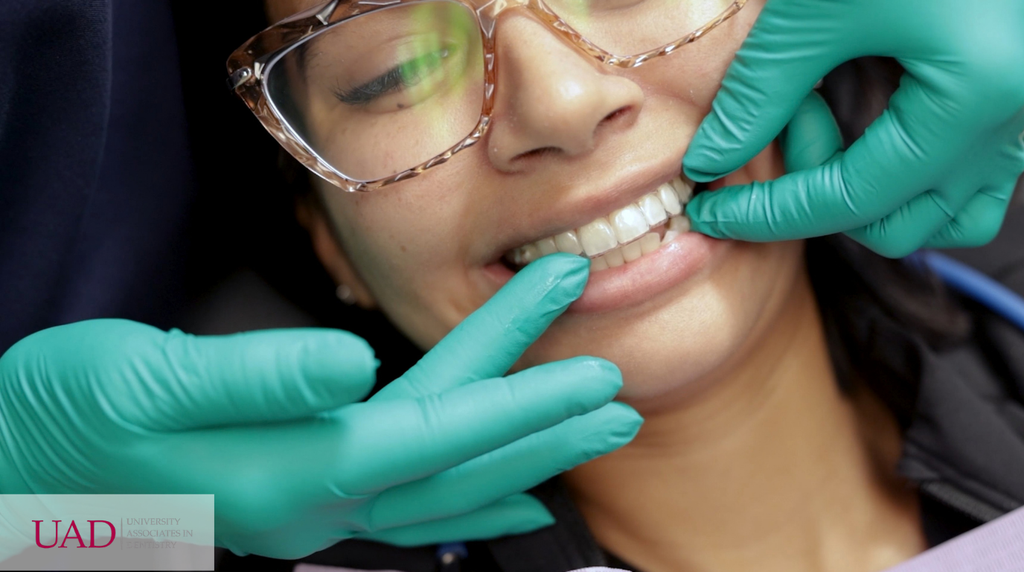
When adults weigh Invisalign® vs. braces, the decision is about daily life. How you eat. How you look in a meeting. How much time you can give to appointments. Whether you’ll keep up with your part of the plan.
Braces are bonded to your teeth and stay on for the whole treatment. That works well for younger patients, who may not be ready to manage a removable appliance on their own.
Adults have different priorities. Plenty would rather not have brackets and wires in their smile at work. Invisalign® is built around that. The trays are clear, they come out when you need them to, and your plan is mapped on a digital scan before treatment starts.
Why Dr. Zalay recommends Invisalign® for adults

They’re clear
Invisalign® aligners are clear plastic trays shaped to your teeth. Will anyone notice? For most adults, the answer is: barely.
Some plans call for attachments. These are small tooth-colored bumps that help the trays grip and guide each tooth. Dr. Zalay places any attachments on your back teeth, so your front teeth stay clear.
They come out when you need them to
Take the trays out for meals, brush, and put them back in. You can also take them out for an important event, like a big presentation or a wedding. There’s no list of foods to avoid and nothing for food to get stuck in.
Treatment often takes less time
Invisalign® generally takes less time than braces. Your exact timeline comes from your own scan, and Dr. Zalay walks you through it before you start.
They’re comfortable
The trays are smooth plastic, with no brackets or wires against your cheeks. They don’t hurt. You may notice light pressure for a day when you switch to a new set, which means they’re working.
Your teeth and gums stay healthier
Because the trays come out, you brush and floss the way you always have. Cleaning is easier than working around brackets, and that lowers your risk of cavities and gum problems during treatment.
They protect your teeth if you grind or clench
The trays cover the biting surfaces of your teeth. If you grind or clench, the plastic takes that wear instead of your enamel.
How Invisalign® fits your schedule
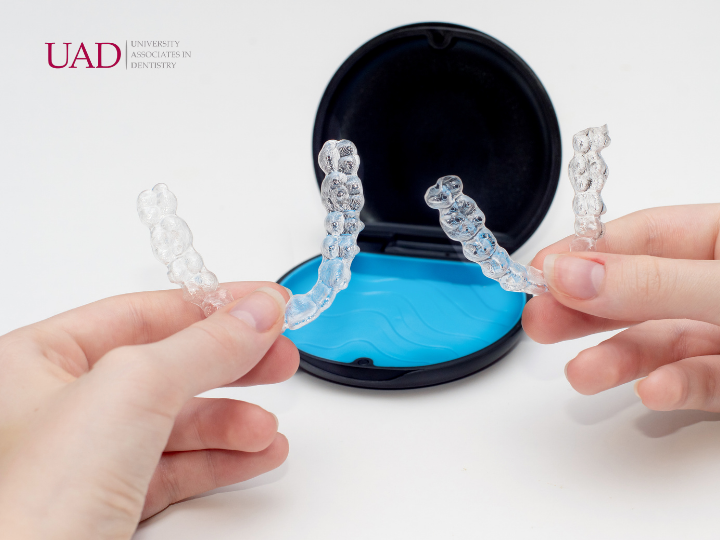
Invisalign® works around your life. Dr. Zalay gives you 6 to 8 sets of trays at a time, each one dated. You switch to the next set every week on your own, so you always know where you are in treatment.
If you’re traveling or can’t get to the office, your treatment keeps moving. You’re still changing trays on schedule.
The one thing Invisalign® asks is that you wear the trays. The American Association of Orthodontists describes 20 to 22 hours a day as the typical requirement for clear aligners. In practice, the trays stay in except for meals and brushing. That routine is one reason Dr. Zalay generally recommends Invisalign® for adults and braces for younger kids.
After treatment, you’ll wear a retainer to hold your teeth in their new position. Every orthodontic treatment ends this way, and the retainer is what protects your result.
When Invisalign® is part of a bigger plan
Adult smiles carry history. Worn edges from years of grinding. Old crowns that no longer match. A missing tooth. Straightening alone doesn’t address those, and the order of treatment matters.
Aligning your teeth first often makes the restorative work that follows more conservative. Straightening a crowded arch before veneers or crowns can mean less of your own tooth needs to be removed. Opening or closing a space for an implant can also be an important goal in the treatment planning.
At UAD, general dentists and specialists work in one office. Dr. Zalay plans the alignment and Dr. Schelkopf plans the prosthodontic work. They look at the same scan of the same patient, down the hall from each other.
How the consultation works
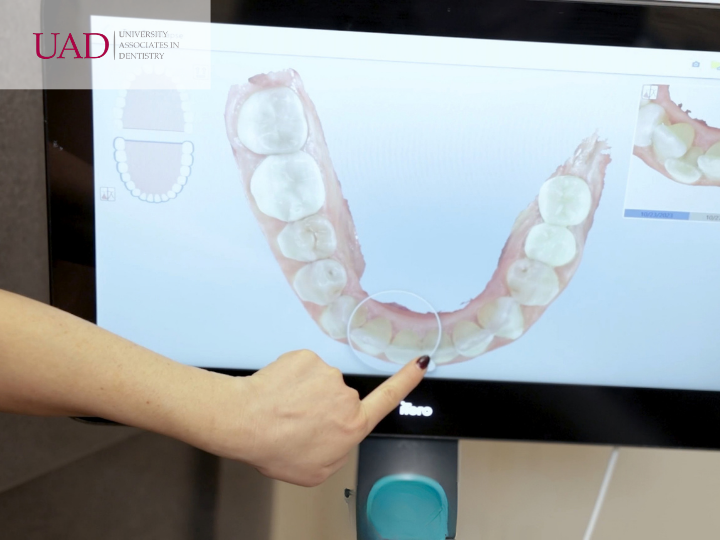
The consultation is complimentary and takes one visit. Dr. Zalay looks at your teeth, gums, bite, and dental history, and takes X-rays. She scans your mouth with an iTero digital scanner, which builds a simulation of how your teeth would move and where they would finish. You and Dr. Zalay review that simulation together. From it, she can tell you how long treatment will take and exactly what to expect.
You’ll leave with:
- A simulation of your finished smile, reviewed with Dr. Zalay
- A treatment time estimate for your case
- The cost in writing, plus financing options
- A check of your insurance benefits from our insurance coordinator
Frequently Asked Questions: Invisalign® vs. Braces for Adults
Am I too old for Invisalign®?
No. Teeth can move at any age when the bone and gums supporting them are healthy. The American Association of Orthodontists makes the same point. Dr. Zalay checks your gum health at the consultation.
Will people be able to tell I’m wearing aligners?
For most adults, the answer is: barely. The trays are clear, and Dr. Zalay places any attachments on back teeth so your front teeth stay clear.
How long does Invisalign® take?
Invisalign® generally takes less time than braces. Your exact timeline comes from the simulation Dr. Zalay reviews with you at your first visit.
Will insurance cover Invisalign®?
Often, yes. Many dental plans with orthodontic benefits cover clear aligners the same way they cover braces. Coverage varies by plan, so our insurance coordinator checks yours before you decide.
Is Invisalign® uncomfortable?
No. The trays are smooth plastic and don’t hurt. You may notice light pressure for a day when you switch to a new set, which means your teeth are moving.
What if I travel during treatment?
Your treatment keeps going. You leave with 5 to 8 dated sets of trays and change them weekly on your own, so a trip doesn’t hold anything up.
Do I need a retainer afterward?
Yes. Teeth drift back toward where they started if nothing holds them. That’s why adults who had braces as kids sometimes see crowding come back.
What if my case needs braces?
Dr. Zalay will tell you at the consultation and refer you to an orthodontist she trusts.
See What Invisalign® Can Do for Your Smile
Invisalign® vs. braces for adults is a question a scan answers faster than a search can. At your complimentary consultation, Dr. Zalay will show you a preview of your result, how long treatment would take, and what it would cost. Let’s sit down and talk it through.
Schedule your complimentary consultation at 222 N. LaSalle in the Loop, or call (312) 704-5511.