
Dental Crowns

Serving St. Albert and Edmonton
Damaged teeth can be a persistent frustrating, and sometimes painful oral health problem.

Teeth are often injured due to accidents, decay, clenching, grinding, or other factors, and when a tooth is hurt so severely that a filling is insufficient, a crown can become the best course of action. Dental Crowns restore the structural integrity to a single tooth, or groups of teeth and aim to prevent further deterioration and breakdown that can lead to tooth loss.
St Albert dental crown expert, Dr. Robert Lesniak is a leading prosthodontic specialist in the Edmonton area. At his clinic in St Albert, Alberta, you can rest assured you will receive the outstanding oral healthcare you deserve in all aspects, including the application of dental crowns. Dr. Lesniak is a board- certified specialist in prosthodontics that encompasses aesthetic care, and his passion is to help each patient reclaim their health, beauty, and exceptional quality of life by restoring their smile.

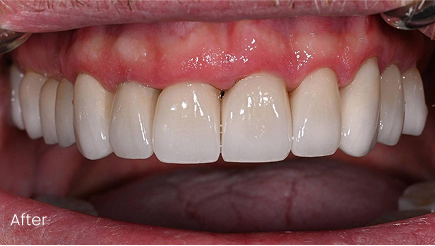
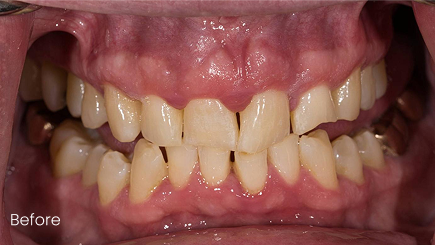
Crowns Before & Afters

What are Dental Crowns?

As we age, tooth wear, disease, and decay can begin to take their toll. Teeth can become worn down and damaged by cavities and cracks, which can be very painful and make teeth more susceptible to further deterioration. When that damage becomes severe, minor repairs like sealants and fillings are not enough to repair the injury and protect the tooth. Dental Crowns are the next line of defense to prevent failure of the tooth, which could lead to tooth loss. At their most basic, crowns are a covering placed over a damaged tooth. They can be made of a variety of materials, all designed to protect the tooth while maintaining proper, natural function. Some of the materials used include:
  • Porcelain
  • Biocompatible ceramics
  • Combination of materials
Each material has advantages and disadvantages, including appearance, durability, and interactions with natural teeth and the body. Edmonton dental crown provider, Dr. Lesniak employs an extensive assessment and planning process to ensure that every aspect of your needs is addressed.

How do I know if Dental Crowns are right for me?

In addition to fixing individual teeth, prosthodontists use dental crowns to correct bite problems in patients requiring full or near-full reconstruction to restore functionality and an attractive, natural appearance.
Dental Crowns are commonly used in situations where teeth have become severely worn down, cracked, or weakened. In order to create the best foundation for a functional and beautiful bite, additional work is sometimes required. Determining if a crown is right for you will depend on several factors, including:
  • The extent of damage
  • The function of the tooth
  • The structure of the tooth
  • Location of the tooth
  • Condition of gums and surrounding teeth
  • Your bite
  • The extent of damage
  • The function of the tooth
  • The structure of the tooth
  • Location of the tooth
  • Condition of gums and surrounding teeth
  • Your bite

In some situations, only a partial dental crown is necessary. These onlays or ¾ crowns provide the same protective function as a full dental crown, but only for a specific portion of a tooth. Dental Crowns may also be required for healthy teeth in cases where a tooth is missing, and a dental bridge is the recommended replacement method.

During your initial consultation for dental crowns St Albert Prosthodontist, Dr. Lesniak will follow a detailed diagnostic and treatment planning protocol, including a 60-min comprehensive exam followed by any additional data collection or imaging. Only once we have a full understanding of the structure and function of your teeth will we begin the discussion about your treatment plan.

Dental Crowns Procedure

Prosthodontics is considered the highest level of specialized dentistry, so it is essential that we get your treatment right, and that requires meticulous attention to detail.
We are often the last stop on our patients’ quest for restoring their smile, with many presenting complex cases or having undergone previous procedures without success. For this reason, Dr. Lesniak cuts no corners in the planning process. During your examination for dental crowns Edmonton prosthodontist, Dr. Lesniak will perform a thorough examination of your mouth and jaw’s function and structure, including x-rays, detailed photographs, and modeling, to fully evaluate your case. In addition, he may review your dental history, previous procedures, and medical history to achieve the most comprehensive understanding of your condition before considering what your treatment plan will look like.
As Edmonton dental crown expert, Dr. Lesniak is dedicated to highly individualized solutions, he will provide you with the details of your treatment once every facet of your care has been discussed and agreed upon. If you and Dr. Lesniak determine that a dental crown is the best option for you, you can expect a planning phase, which includes the placement of a provisional crown, followed by the installment of your long-term crown.
Every St. Albert dental crown patient should be advised that their treatment can vary greatly from another’s, even within the same procedure. Depending on your needs, other treatments may be necessary for creating the ideal foundation for optimally stable, functional, and aesthetically pleasing results. For patients with severe bite problems, this may entail a full or partial dental reconstruction.

Schedule your St Albert Dental Crown consultation with Dr. Robert Lesniak today

Contact Dr. Lesniak now to find out if a crown may be the right solution to repair your tooth damage. You will be able to rest assured that you are receiving the specialized and compassionate care you deserve.
To request an appointment, contact Dr. Lesniak’s office in St Albert, Alberta, by filling out the consultation form or by calling (780) 851-6952 . Dr. Lesniak is committed to delivering the exceptional, personalized care — and smile — you deserve!

Dental Crowns Recovery

After each visit, Edmonton dental crown specialist, Dr. Lesniak will provide you with detailed instructions for caring for your dental crowns (provisional or permanent). It can typically take up to several weeks before you cease to notice the change following the installation of your permanent dental crown.

It is common to experience some pain and swelling after each procedure once the anesthetic has worn off. Usually, this discomfort is not severe and can be managed with over-the-counter medication and proper care. However, if you experience any concerns, contact Dr. Lesniak’s office immediately.

Dental Crowns Results

Following your procedure, you will have a stabilized tooth (or teeth) that is less prone to fracture, a stable bite, and an improved overall appearance. Over time, you may even forget you have one. A dental crown can be expected to last several years, but its duration will depend on its material, care, and wear patterns, among other factors.
Proper care is essential for the optimal performance of a dental crown. Consistent and proper dental hygiene practices are important, including regular brushing and flossing. The junction between the crown and tooth is susceptible to decay, and it must be kept diligently clean. Also, much like your natural teeth, crowns can be prone to mechanical damage from wear and tear. It is also recommended that you avoid chewing hard foods (including ice) as these can cause crowns to crack. Also, a night guard may be recommended if you clench or grind your teeth at night.

Dental Crowns Frequently Asked Questions